Hi, my name is
Cameron Renteria.
Imaging matter from atoms to architectures.
I'm an NIH-NIDCR Postdoctoral Fellow in Materials Science & Engineering at the University of Washington, designing ceramic composites for additive manufacturing through measurement-driven simulation. My research combines synchrotron CT, deep learning, atom-probe tomography, and physics-informed neural networks.
01 About
I work at the intersection of synchrotron X-ray imaging, deep learning, and materials design. Most of my work turns multi-modal characterization data — micro-CT, nano-CT, ToF-SIMS, atom probe — into quantitative descriptions of microstructure, then uses those descriptions to design manufacturable hierarchical materials.
Recent projects span an enamel-inspired biomimetic lattice pipeline (Matter, in prep), a cross-species nano-CT segmentation paper (Acta Biomaterialia, corresponding author), a strain-tunable holographic photopolymer (US provisional patent, 2026), and a physics-informed neural network for Li-ion battery mechanism discovery.
Previously: PhD in Materials Science & Engineering, University of Washington (2023, advisor Dwayne Arola).
Tools I use day-to-day:
02 Experience
NIH-NIDCR T90 Postdoctoral Fellow @ University of Washington
Sept 2023 — Present
- ▹ Designing ceramic composites for additive manufacturing through measurement-driven simulation
- ▹ Leading the synchrotron-CT → biomimetic-lattice pipeline (Matter, conditional invitation to submit)
- ▹ Reconstructed 2,423 complete 3D rod trajectories at 0.345 µm isotropic resolution; HSB periodicity 56.3 µm
- ▹ Self-supervised Noise2Inverse denoising (375% noise reduction) + U-Net segmentation (>85% Dice)
- ▹ Coordinate research across four DOE national labs (ANL, LBNL, PNNL, INL); $1M+ in regulated R&D programs
Data Scientist & Engineering Technical Lead @ Equicare Solutions LLC
Nov 2023 — Present
- ▹ Direct a 6-engineer team building custom experimental hardware — Python controllers, sensor integration, parametric CAD, FEA-informed iteration
- ▹ Architected an autonomous SAXS / WAXS / GIWAXS / GISAXS analysis pipeline with GPU-accelerated differentiable fitting and Kalman-filter temporal regularization — 98% reduction in analysis time
- ▹ Built a VAE-based anomaly detector flagging device drift 3–5 frames before human-observable failure — 80% improvement in device reliability
- ▹ Authored ISO 13485 / 21 CFR 820 / GMP-aligned SOPs and an IQ/OQ/PQ validation stack (URS → VP → qualification → control plans, FMEA)
- ▹ Co-inventor on U.S. provisional patent (UW CoMotion, 2026); co-secured Washington Research Foundation Phase I grant ($109,778)
PhD, Materials Science & Engineering @ University of Washington · Arola Lab
Sept 2018 — Aug 2023
- ▹ Dissertation: Structure–Property Relationships in Natural Materials: The Case of Tooth Enamel
- ▹ Led a 5-year, $800k Colgate-Palmolive industry collaboration; contributed to issued partner patent (US-20230038764-A1)
- ▹ Integrated synchrotron μCT, SEM/EDS, EBSD, TEM, XRD, FTIR, Raman, DLS, rheometry, and DMA / NanoDMA / DSC / TGA / nanoindentation
- ▹ Pioneered deep-learning particle image velocimetry for synchrotron CT trajectory extraction
- ▹ Established collaborations now spanning four DOE national labs; 20+ presentations at national / international conferences
03 Projects
01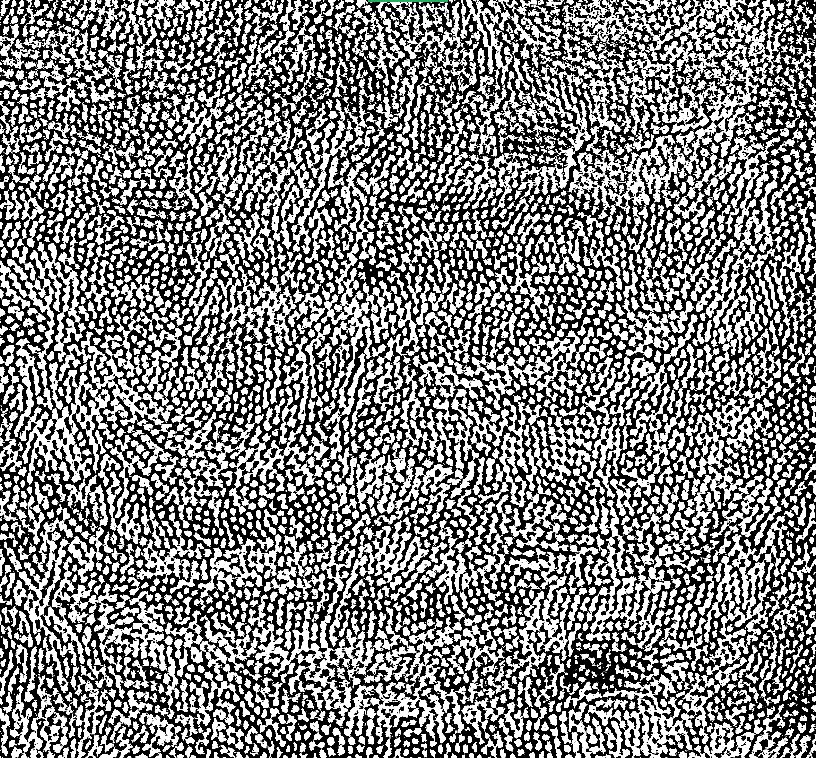
Synchrotron Micro-CT → Biomimetic Design
A zero-free-parameter pipeline that extracts enamel rod architecture from ALS 8.3.2 nano-CT using deep-learning PIV, quantifies fabric orientation, and translates the geometry directly into 3D-printable lattices with FEA-validated fracture-tolerant behavior.
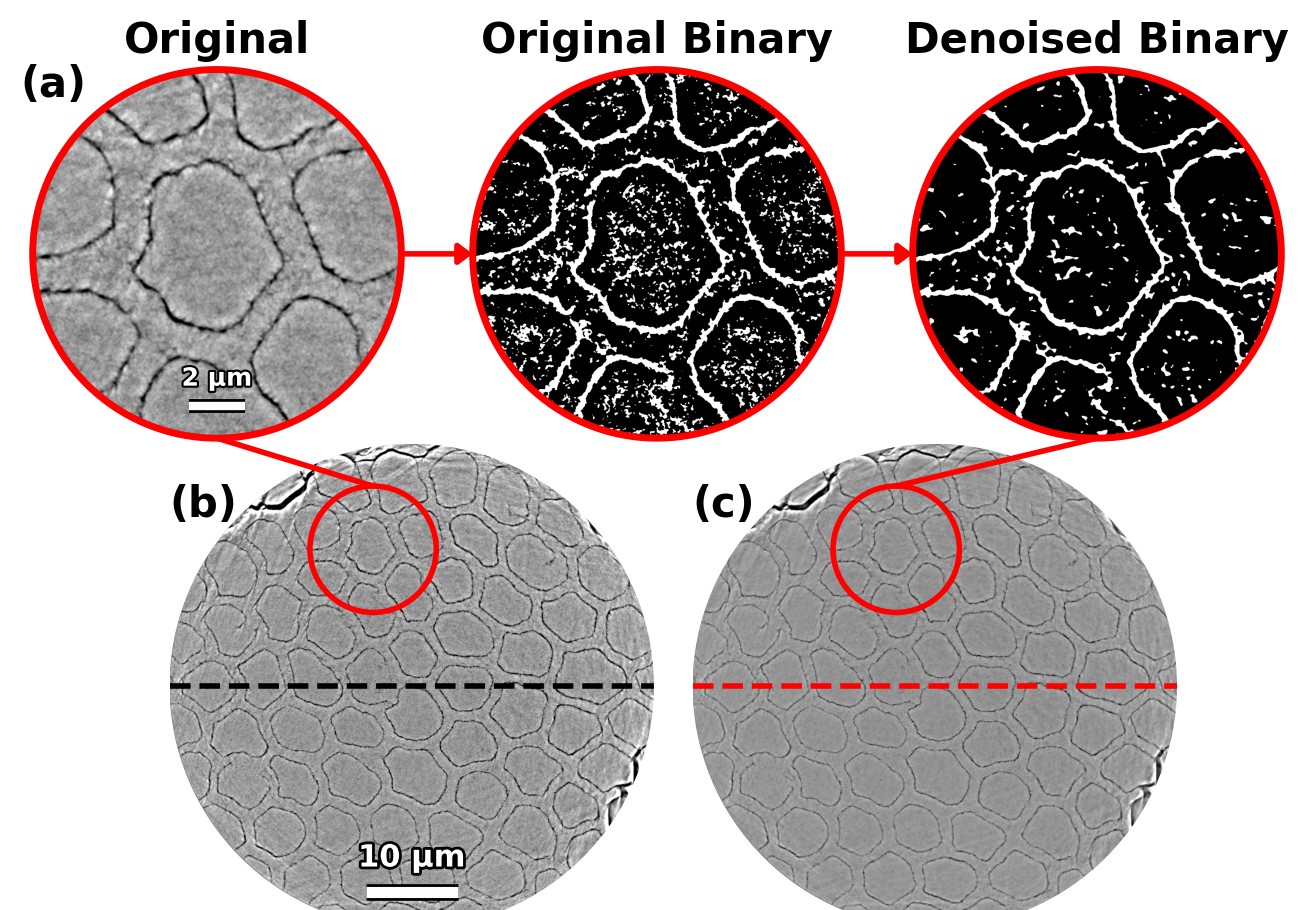
Cross-Species Nano-CT Segmentation
Deep-learning segmentation of nano-CT enamel across human, lion, and African wild dog. Combines Noise2Inverse self-supervised denoising with U-Net to resolve nanoscale rod geometry — published in Acta Biomaterialia (corresponding author).
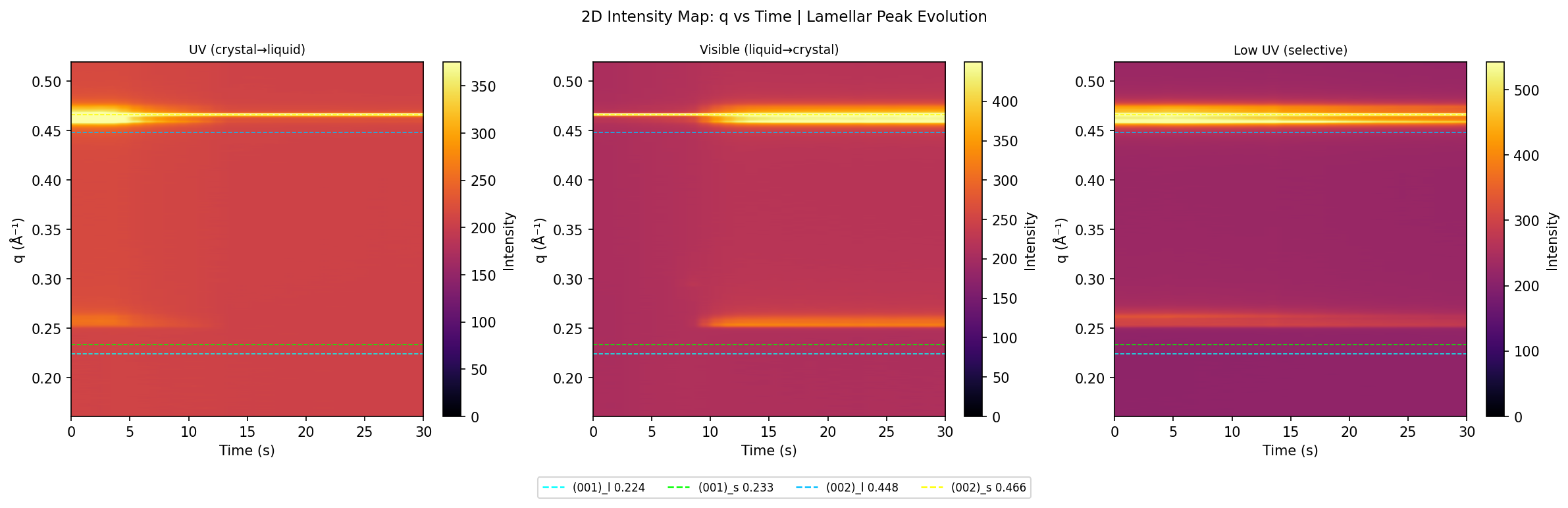
Differentiable Multimodal X-ray Scattering
GPU-accelerated SAXS / WAXS / GISAXS / GIWAXS pipeline with physics-informed temporal regularization, automated peak tracking, and Richardson–Lucy deconvolution. Reproduces operando azopolymer dynamics from Shin et al. (PNAS 2019) end-to-end.
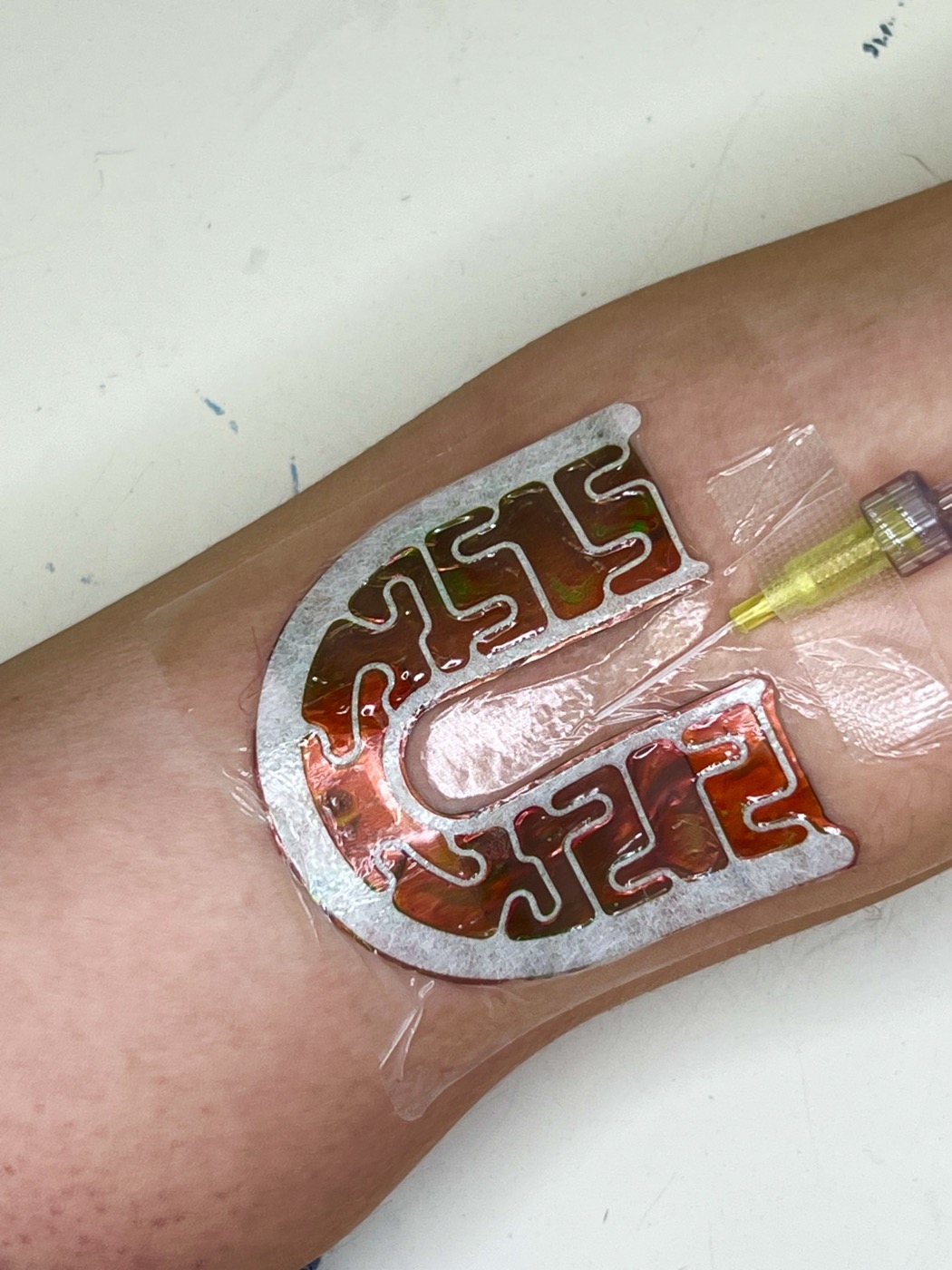
Mechanochromic Holographic Photopolymer
US provisional patent (filed April 2026, UW CoMotion) for strain-tunable photopolymer lattices with embedded holographic elements that produce reversible mechanochromic color shifts under deformation.
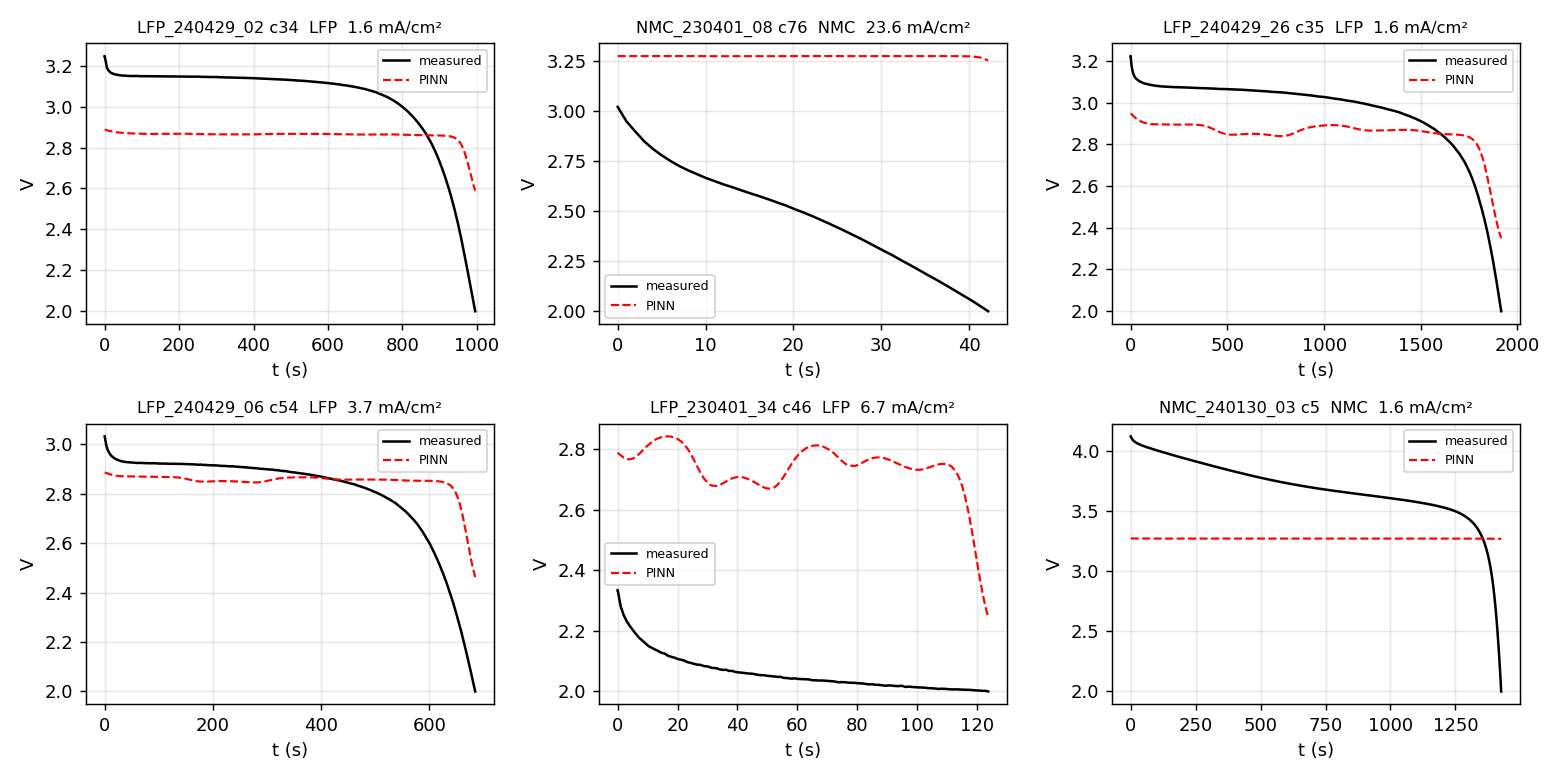
Battery Mechanism Discovery via PINN
Physics-informed neural network that ingests Li-ion discharge curves and outputs electrode-resolved electrochemical parameters. Classifies four rate-limiting mechanisms across 6,343 NMC and LFP discharges with 27.7 mV median V-RMSE.
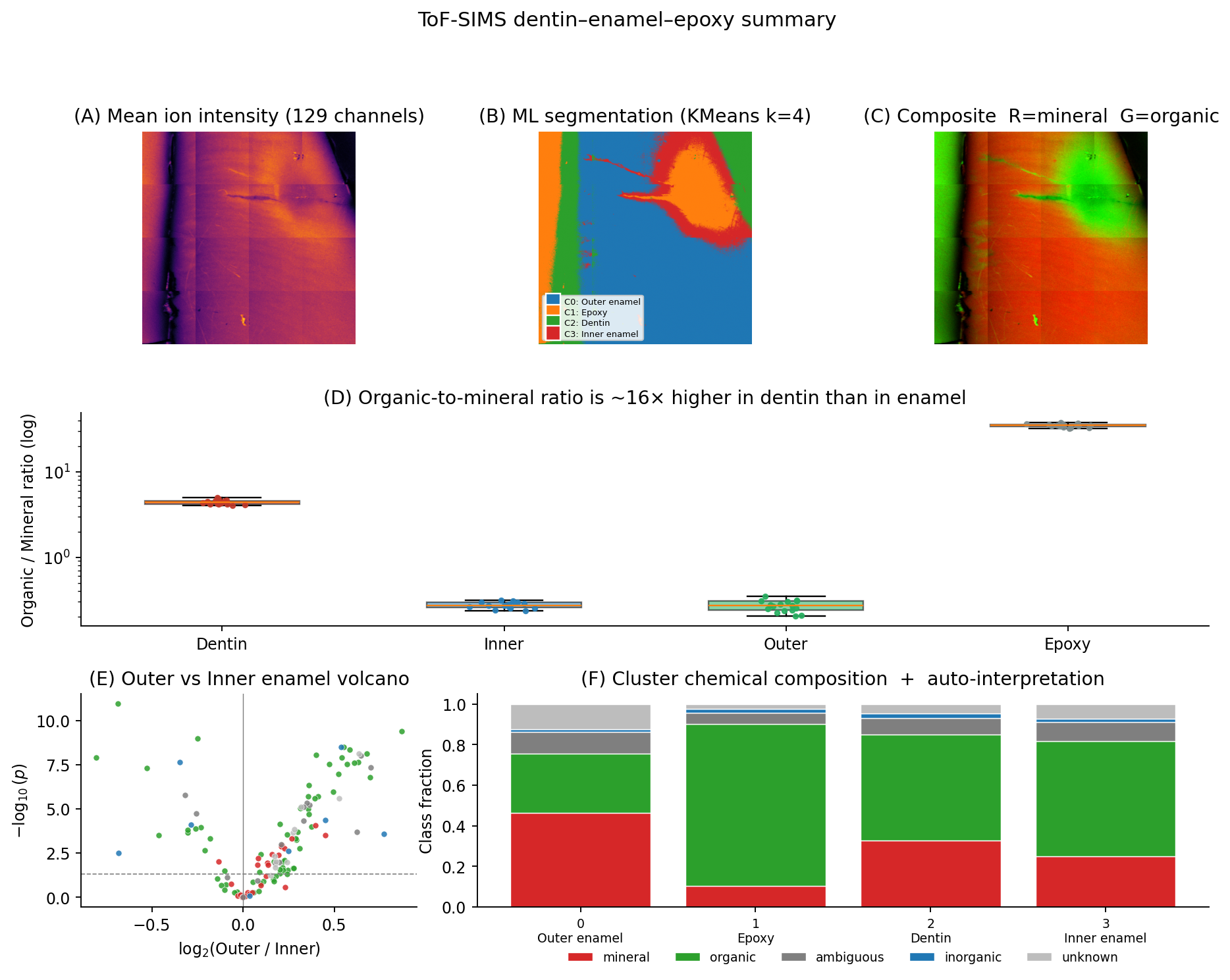
ToF-SIMS Chemical Mapping of Tooth
129-channel ToF-SIMS hyperstack of human-tooth cross-section, segmented into dentin / inner enamel / outer enamel / epoxy via PCA + thresholding, U-Net, and HDBSCAN. Reveals organic-chemistry gradients invisible to histology.
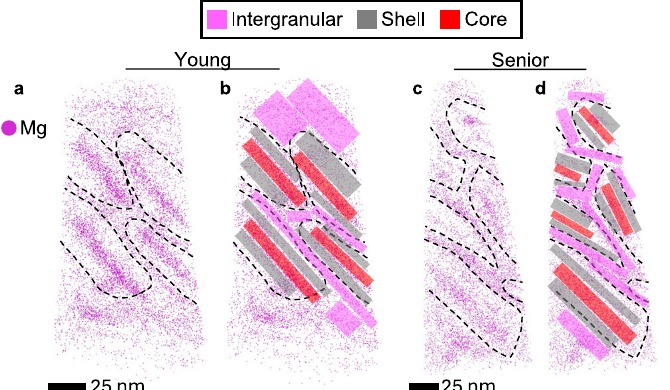
Atom Probe Tomography & APTVIZ
Compositional Community Detection — an unsupervised graph-clustering method for automated chemical-segregation discovery in APT data — plus APTVIZ, an interactive Flask tool for APT exploration. Co-authored in Microscopy and Microanalysis (2025).
04 Publications
Cross-species deep-learning nano-CT enables nanoscale geometric characterization of mammalian enamel rods
Acta Biomaterialia · Corresponding Author
Compositional Community Detection: Automated Identification of Chemical Segregation in Atom Probe Tomography Data
Microscopy and Microanalysis · Co-author
05 — What's next
Get in touch
I'm open to research collaborations, faculty / staff scientist conversations, beamline-science roles, and questions about CT, AM, or the work above.
Say hello →