01 Overview
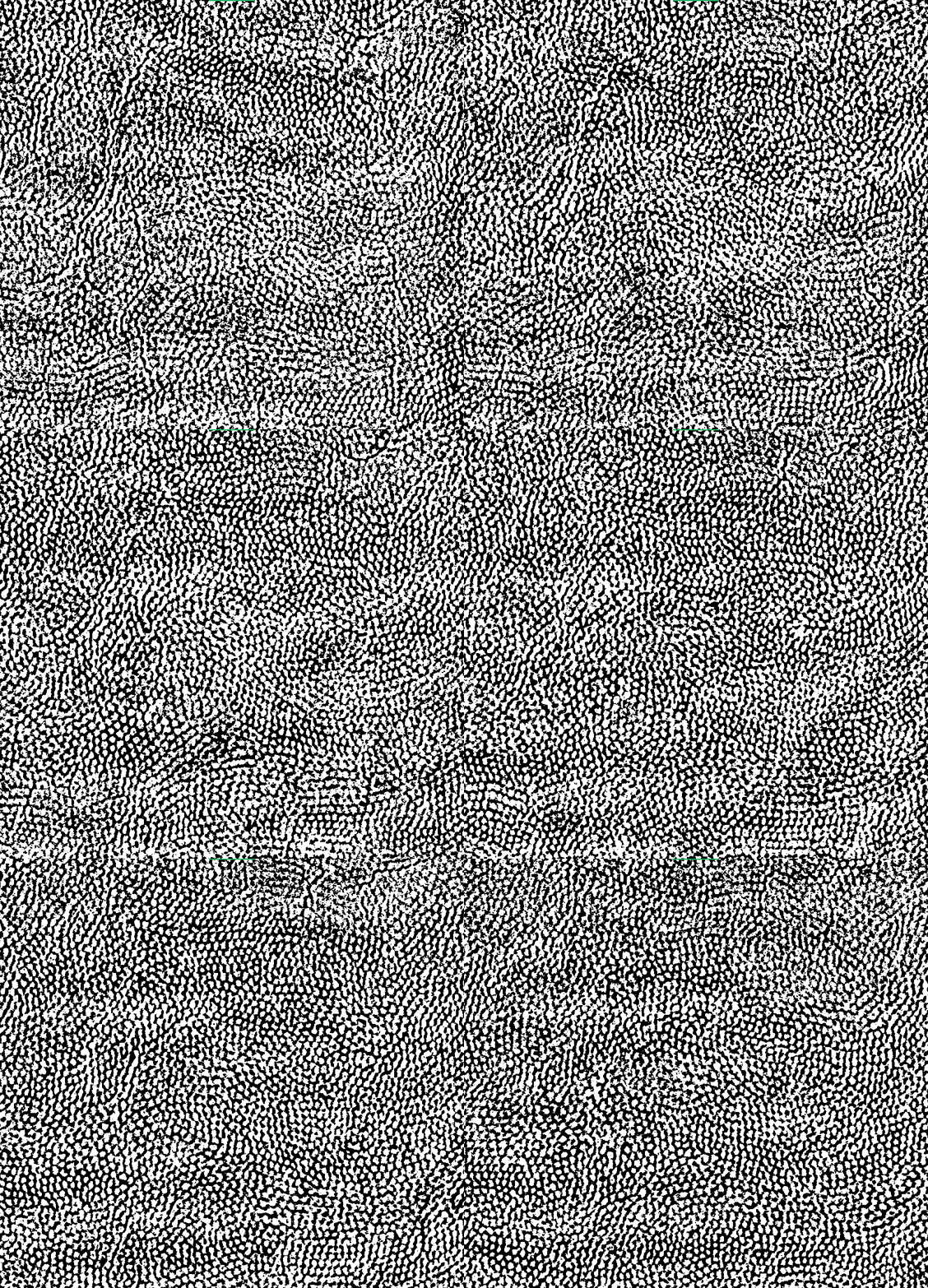
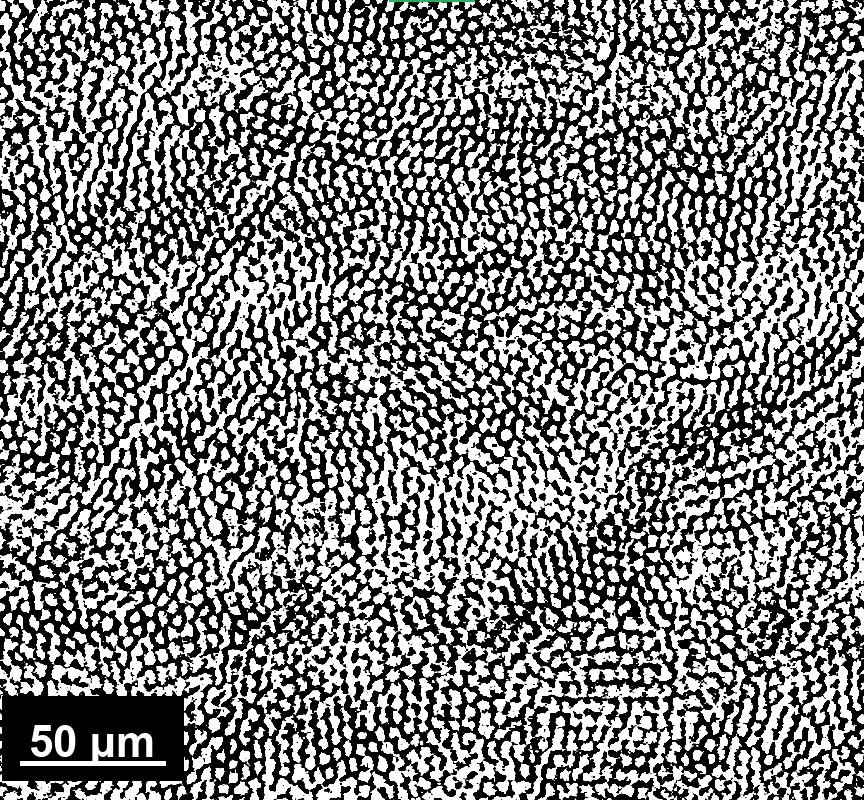
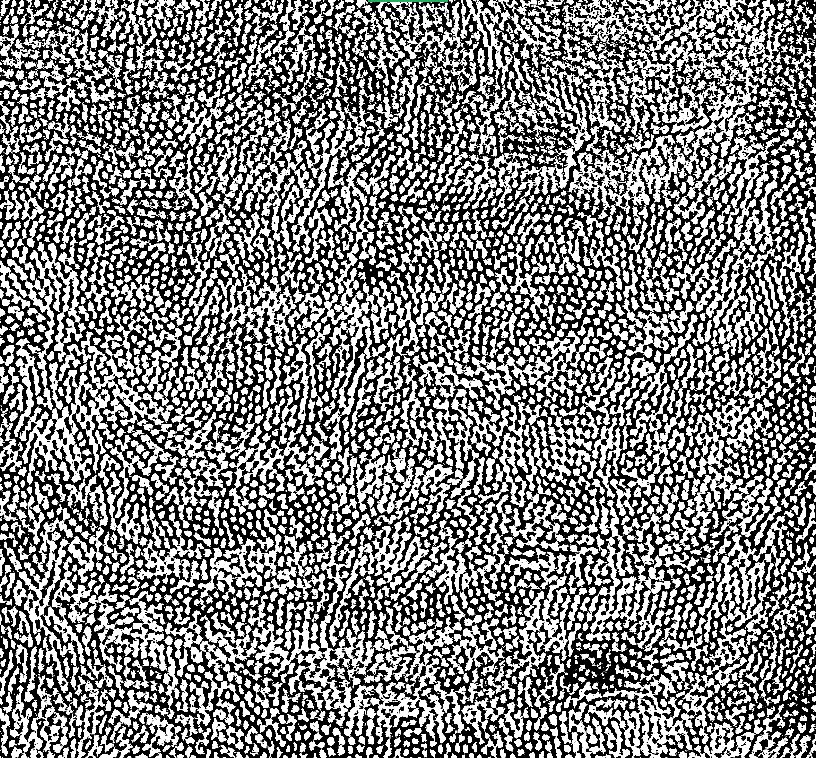
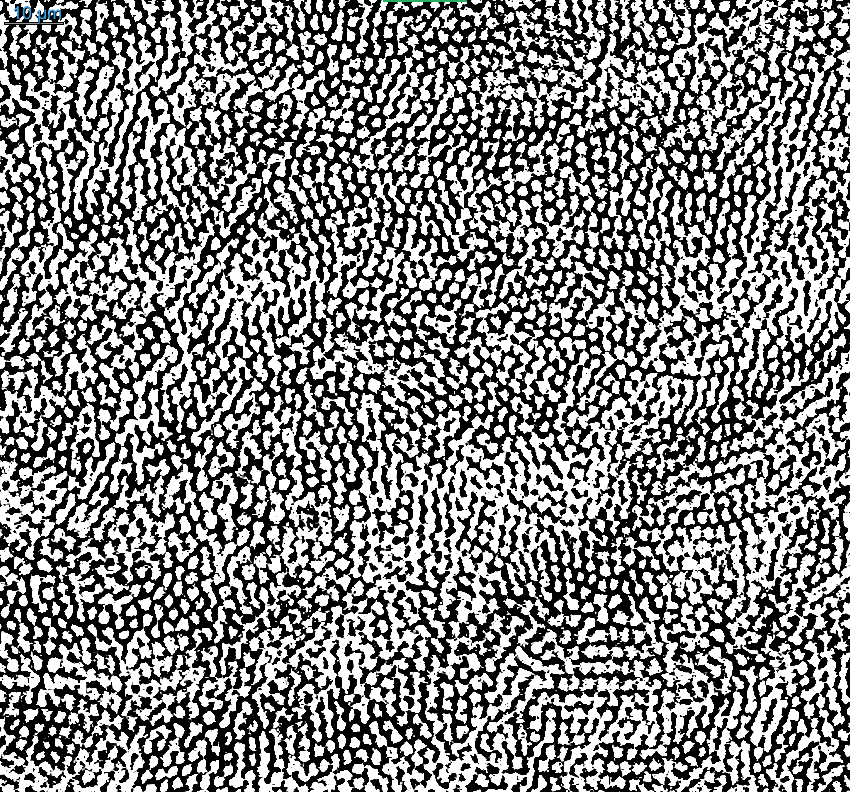
Tooth enamel is one of the most damage-tolerant biological materials known — its hierarchical rod architecture, particularly the Hunter–Schreger bands (HSB) of decussated rods, dissipates fracture energy through a tortuous crack path. The challenge: the geometry that drives this behavior is buried inside a sub-micron 3D rod fabric that's hard to measure, harder to quantify, and almost never translated into manufacturable designs.
This project closes that loop. It's an end-to-end pipeline — synchrotron acquisition, deep-learning trajectory extraction, fabric quantification, parametric CAD generation, FEA validation, and 3D-printed prototypes — with zero free parameters between the imaging and the design.
- Specimen: African lion canine, imaged at ALS beamline 8.3.2
- Volume: 101 slices at 0.345 μm isotropic voxel size
- Tracks recovered: 2,423 complete 3D rod trajectories
- HSB periodicity: 56.3 μm (measured directly from rod fabric)
02 Method
The pipeline runs in three stages. (1) Reconstruction & rod tracking: Phase-retrieved μCT volumes are processed through a deep-learning particle image velocimetry (DL-PIV) network trained to follow rod cross-sections through the volume, producing dense 3D rod trajectories without manual annotation.
(2) Fabric analysis: A second-order orientation tensor is computed per voxel from local rod tangents; eigen-decomposition gives the principal direction and the degree of alignment. This fabric field is what carries information from the biology into the design.
(3) CAD + FEA: The rod field is parametrized as a continuous-twist decussated lattice, exported as STL, and run through linear-elastic FEA. The lattice has tunable geometric parameters (rod radius, twist period, decussation angle), and the optimization report tracks fracture-energy proxies across the parameter space.
03 Interactive results
The full pipeline produces a per-specimen analysis report and an FEA optimization report — both are embedded below.
04 Visuals
05 Status & target
Manuscript currently in preparation for Matter (Cell Press), with editorial feedback in hand. The work is positioned as a complete computational–experimental loop for bioinspired design — the kind that's normally held back by parameter-tuning between stages.