01 Overview
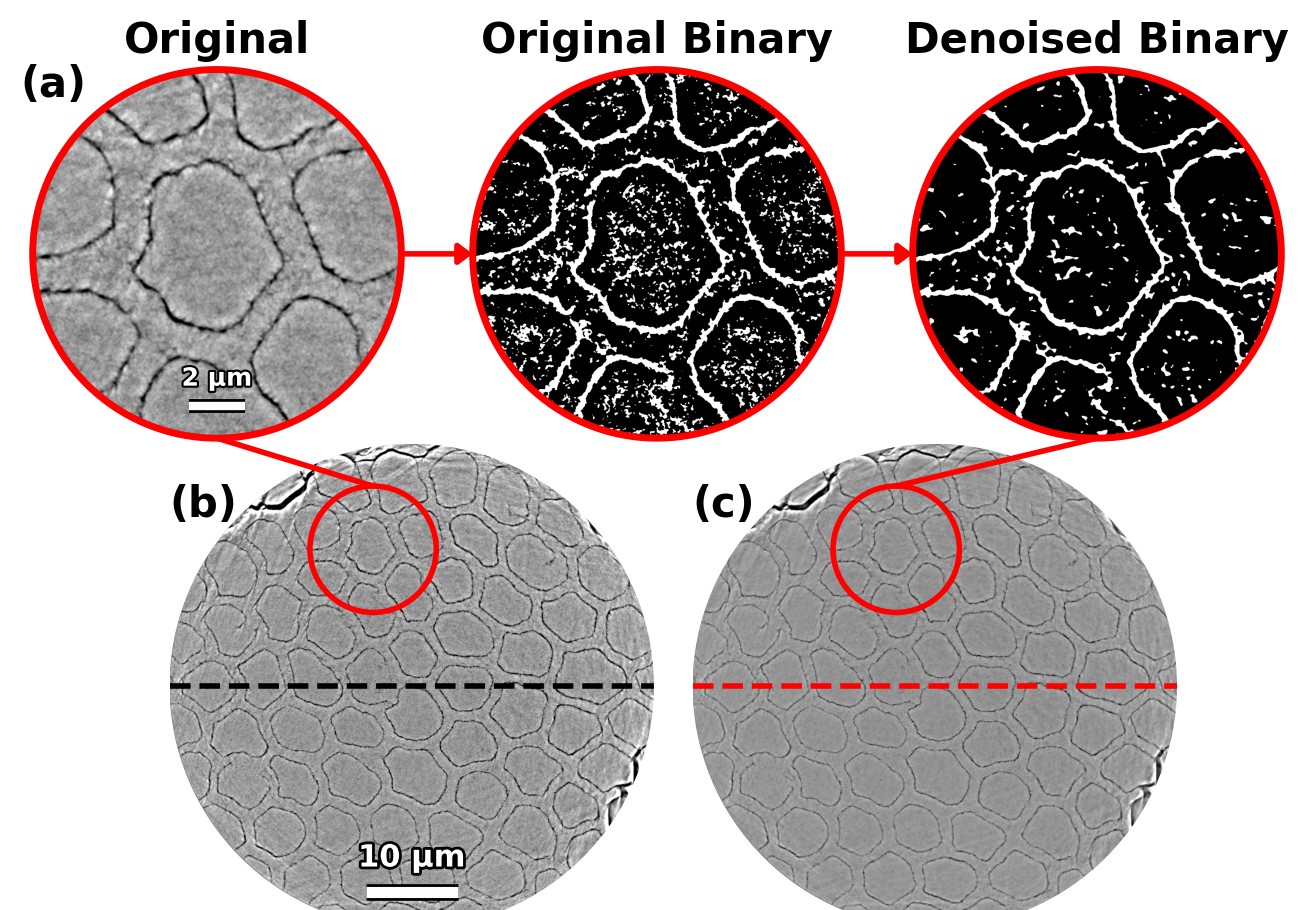
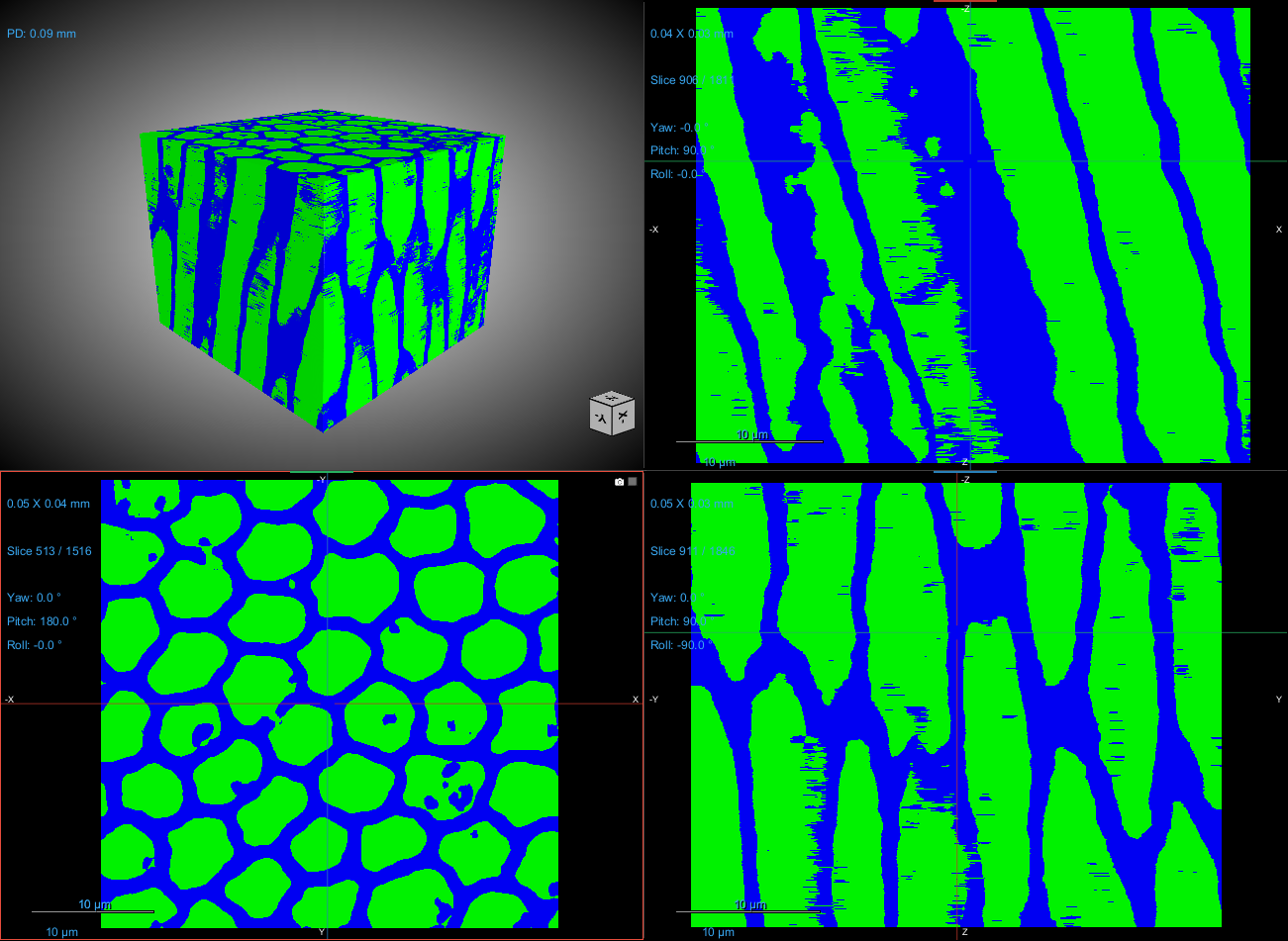
Conventional micro-CT can resolve enamel rods, but only at the bulk scale — the nanoscale geometry that actually controls fracture toughness (rod diameter, packing, circularity) sits below most reconstruction noise floors. This paper shows that a paired self-supervised denoising + U-Net segmentation approach can recover that geometry across three species — human, African lion, African wild dog — and turn it into per-rod metrics suitable for comparative analysis and downstream biomimetic design.
- Species: human, African lion (Panthera leo), African wild dog (Lycaon pictus)
- Imaging: synchrotron nano-CT
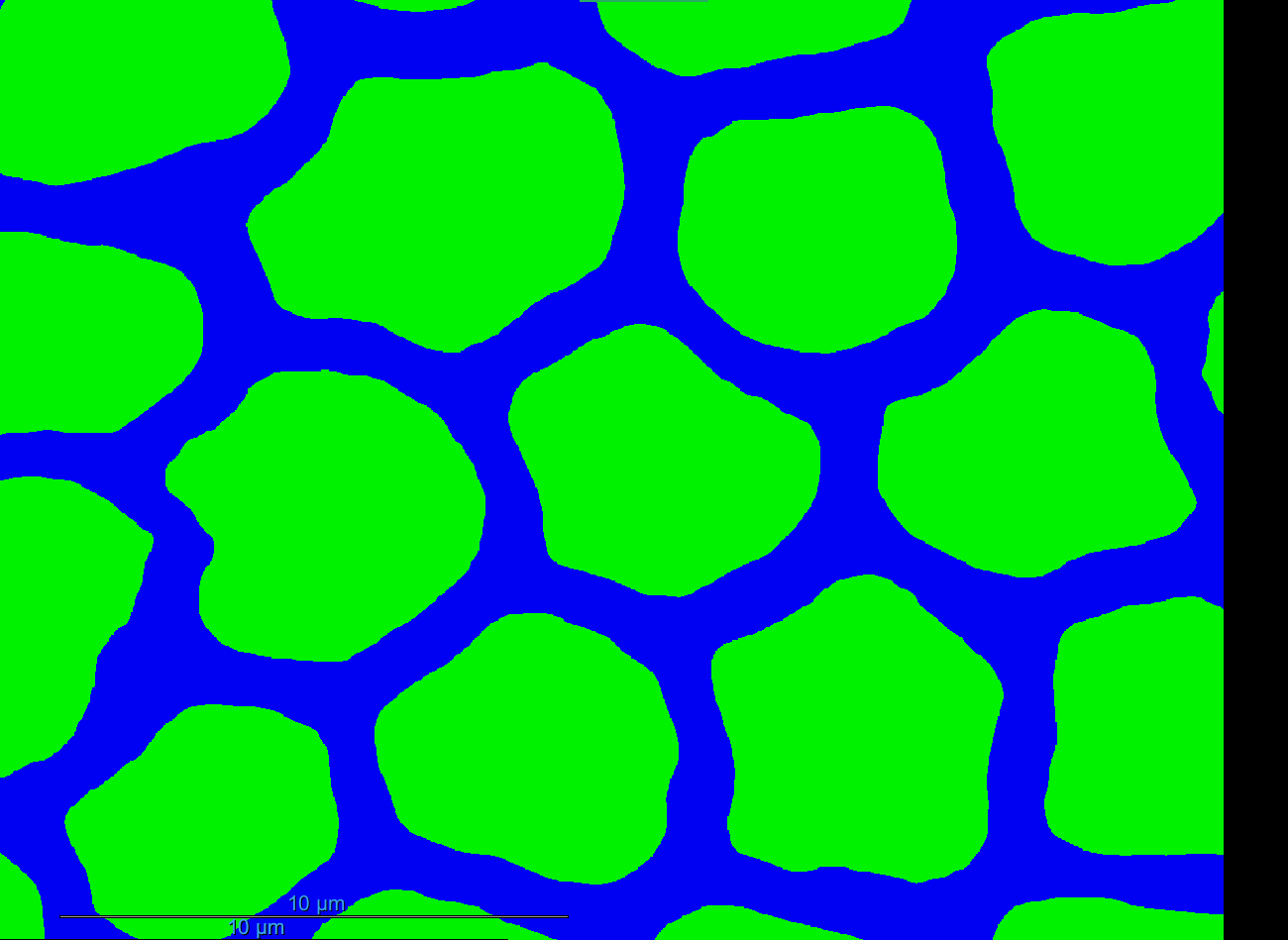
- Output: per-rod diameter, circularity, spacing, orientation
- Downstream: STL meshes for manufacturability screening
02 Method
Noise2Inverse is used as a self-supervised denoiser: the reconstruction is split into projection sub-sets, each sub-set is independently reconstructed, and a network is trained to map noisy reconstructions to their independent counterparts. No clean ground truth is needed — the noise model itself supplies the supervision.
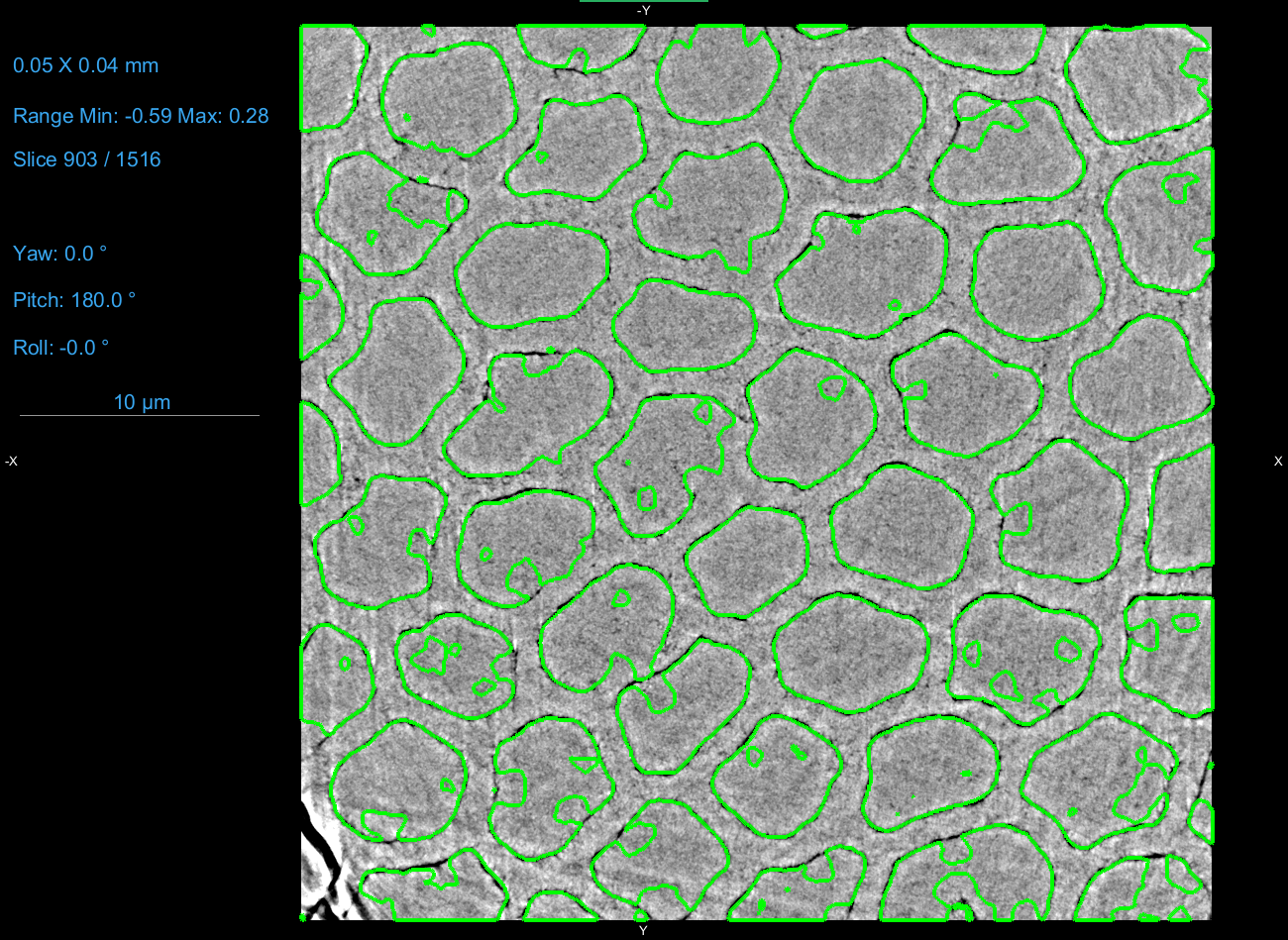
A 2.5D U-Net is then trained on a small set of manually-annotated transverse slices to segment individual rods. From the segmentation we extract rod-level descriptors (diameter, axial profile, circularity, neighbor spacing) and aggregate them into species-level distributions for direct comparison.
03 Visuals
04 Outcome
Published in Acta Biomaterialia as corresponding author. The pipeline now feeds into the biomimetic design work in Project 01, where the cross-species rod geometries inform the parameter space for 3D-printed lattice prototypes.